Connected Products

QR code
Technology: A printed code any smartphone camera can scan. Needs a clear line of sight and reads one item at a time.
Where it fits: Care labels, hangtags, woven labels, carton labels.
Best for: Consumer access to product and DPP data

NFC
Technology: A small chip read by tapping a smartphone within a few centimetres. Unique ID, supports secure authentication.
Where it fits: Sewn-in labels, woven patches, premium hangtags.
Best for: Authentication, premium products, brand engagement
RFID (UHF)
Technology: A chip and antenna read from a distance without line of sight. Hundreds of items in seconds, even inside a carton.
Where it fits:Price tickets and hangtags, wash-resistant care labels, carton and pallet tags.
Best for: Inventory accuracy, logistics, loss prevention, sorting for recycling
Connected products turn every item into a source of data, improving traceability, inventory accuracy, authenticity and circularity across the value chain. We help brands, retailers and manufacturers select and implement the right RFID, NFC and QR solutions, bridging technology providers and the factories where products are made.
What Connected Products Enable

Inventory accuracy
Count stock in minutes, reduce out-of-stocks and improve omnichannel fulfilment.

Authentication
Confirm products are genuine and protect your brand against counterfeits and grey-market sales.

Resale & circularity
A verified product history that supports resale, rental and take-back programmes.

Care & repair
Give customers care instructions, repair options and spare parts, so products last longer.
Digital Product Passport
Materials, origin, certifications and end-of-life data, aligned with upcoming EU requirements.
Digital Product Passport
What is a Digital Product Passport?
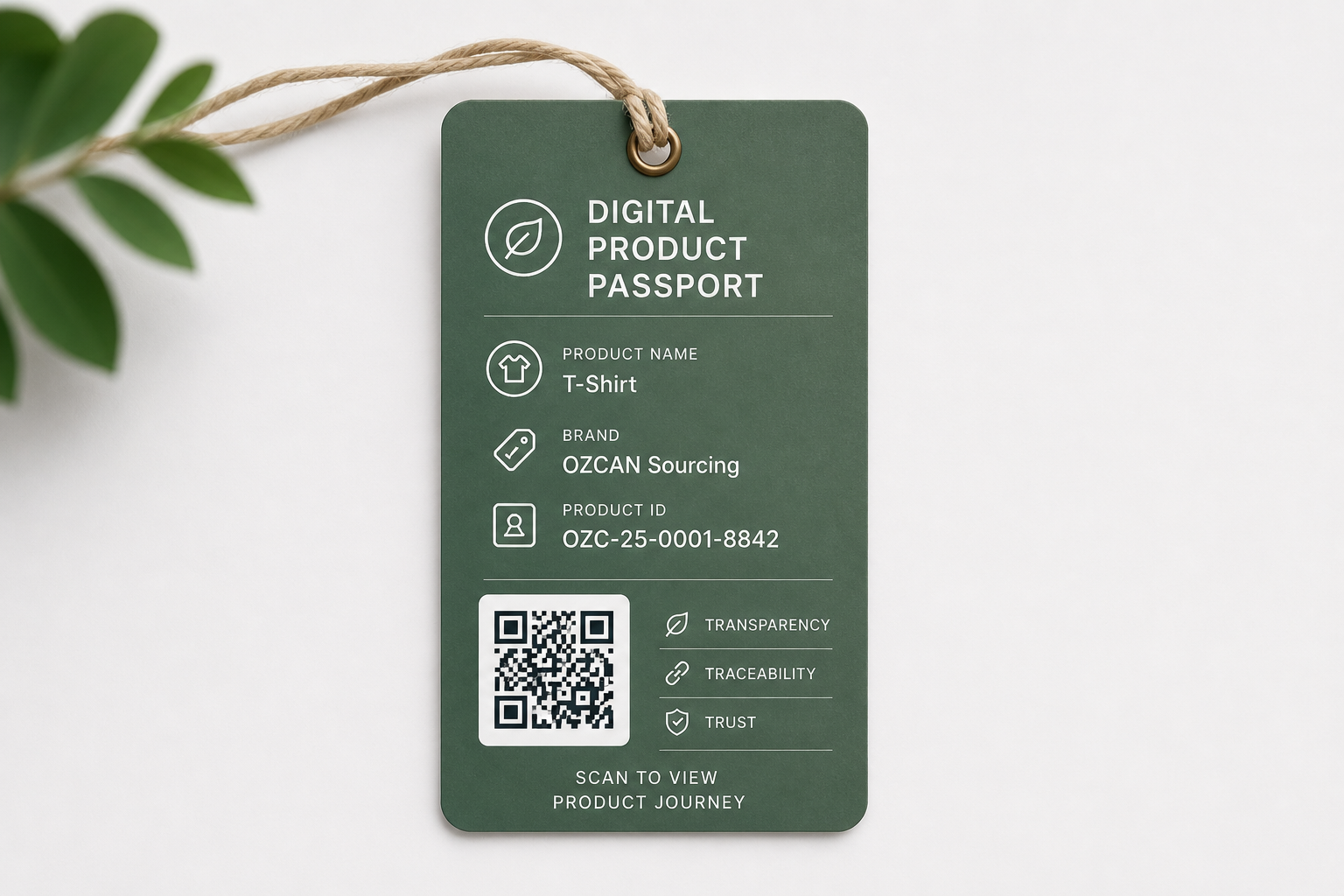
A DPP is a digital record, accessed via QR code, RFID, or NFC containing key information about a product: its materials, origins, certifications, and end-of-life instructions. DPPs are expected to become mandatory for textiles and apparel sold in the EU in the coming years, under the Ecodesign for Sustainable Products Regulation (ESPR).
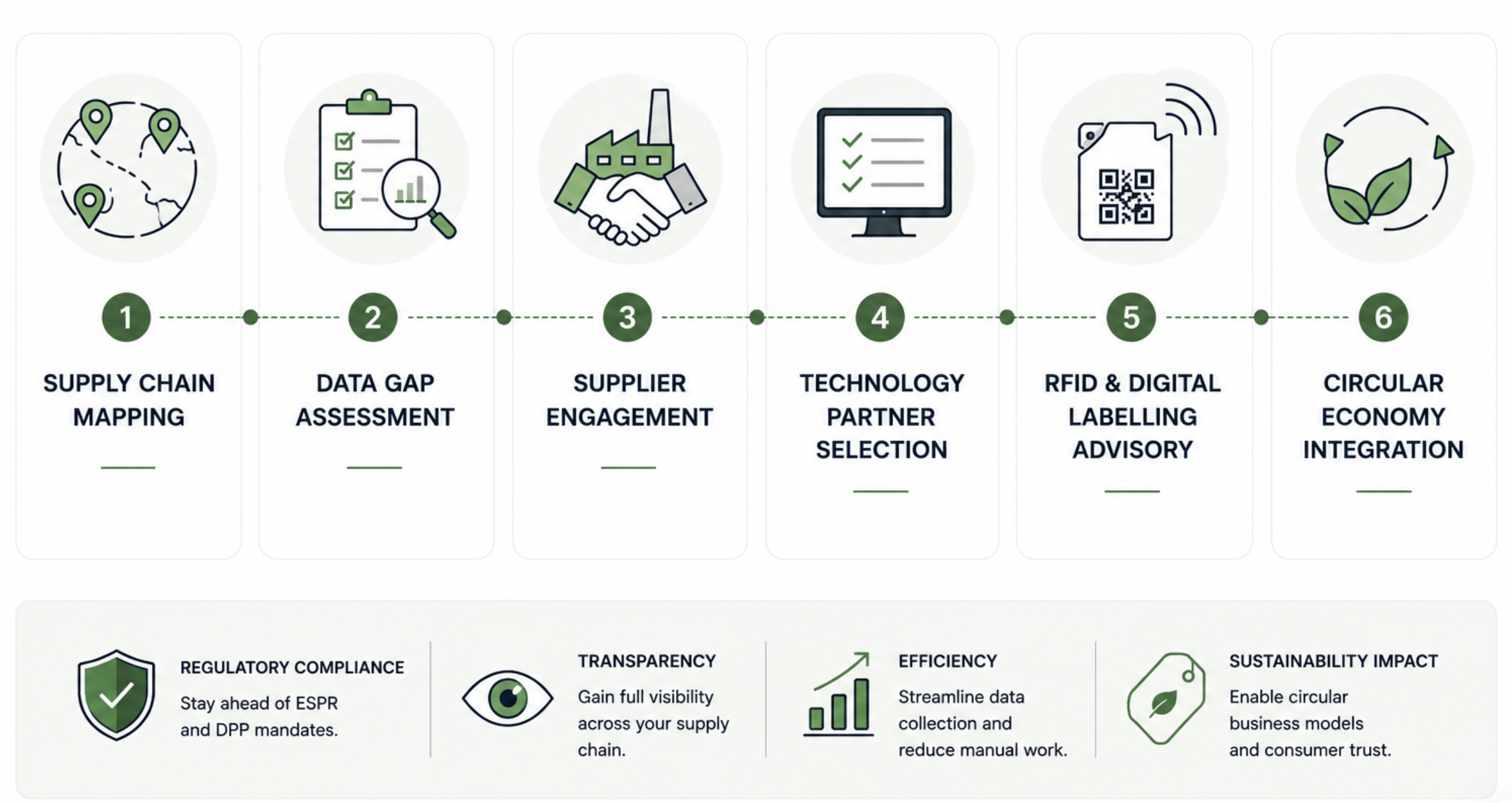
How we help
Supply chain mapping - Identifying your Tier 1–3 suppliers and the data they hold
Data gap assessment - Translating ESPR requirements into a practical checklist for your product range
Supplier engagement - Collecting compliant data directly from manufacturers, leveraging our factory relationships
Technology partner selection - Helping you choose the right DPP platform (RFID, QR) for your scale and budget
RFID & digital labelling advisory - Hands-on guidance on infrastructure
Circular economy integration - Connecting your DPP to take-back, resale, or recycling programmes
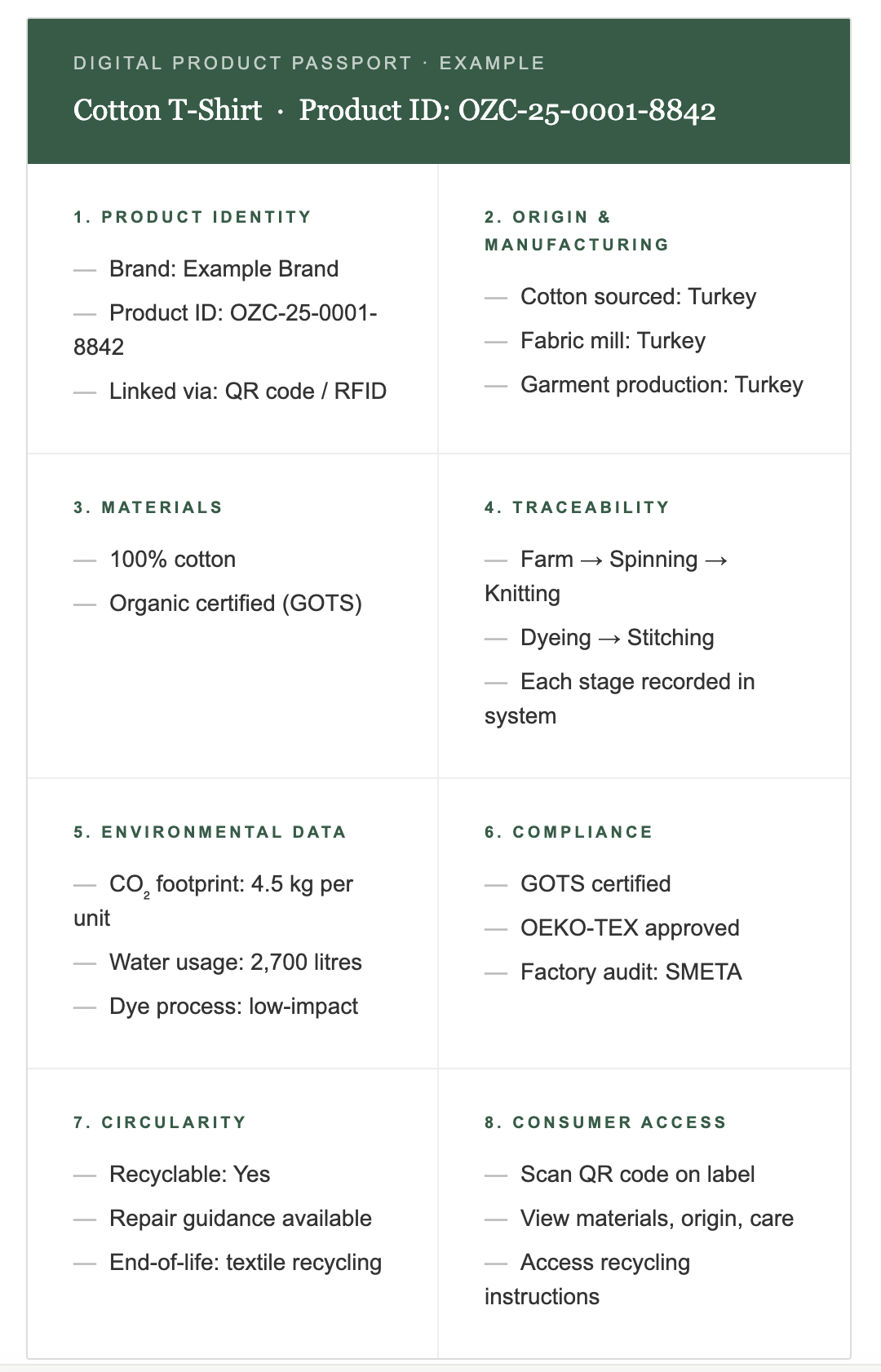
What a Digital Product Passport looks like
A DPP captures the full story of a product — from raw material to end of life — in a single digital record, accessible via QR code or RFID. Here is a real-world example for a cotton T-shirt.